It's time for an update

You've been using your good friend IE for quite some time now. It has been a reliable companion for probably the last 20 years.

Unfortunately, due to technology constantly evolving, we would like to kindly ask you to update your browser to one of your liking from the ones listed below. This will ensure that you're going to have good time on our site. Actually, any site really.

Farewell, Internet Explorer.

Heat pump myths

In this guide, we’ll be debunking eight of the most common heat pump myths and explain why heat pumps are one of the most efficient options when it comes to heating your home.
aroTHERM heat pump side view outside house

Common Questions Heat pumps explained

If you’re thinking about switching to a low-carbon heating system, it’s natural to have questions about how heat pumps work, how much space they need and whether they are suitable for your home.

In this guide, we’ll answer some of the most common heat pump questions and clear up a few common misconceptions. We’ll also explain why they are one of the most efficient ways to heat your home, especially when the system is correctly specified and installed.

Your common heat pump questions answered

Heat pumps are designed to work all year round, including in colder weather. They are also much quieter than many people expect, with modern air source models operating at noise levels similar to common household appliances.

They can be installed in a wide range of homes, including older properties, although your installer will need to assess your insulation, radiators, pipework, hot water needs and available space before recommending the right system. If you'd like to know whether a heat pump might be the right choice for your home, you can get in touch with an installer here.

While installation can cost more than a traditional gas boiler, the UK Government offers financial support through the Boiler Upgrade Scheme (BUS). This grant can cover up to £7,500* of the upfront installation costs, making the switch more affordable for homeowners across England and Wales.

*Latest Update: Boiler Upgrade Scheme Rural Uplift

The Boiler Upgrade Scheme grant is temporarily increasing for eligible homes and small businesses in England and Wales who rely on heating oil or LPG. From 21st July 2026 to 31 March 2027, eligible off-grid properties can get a £9,000 grant for air source or ground source heat pumps.

Whether you're new to heat pumps or you're looking to upgrade to a low carbon heating system, we're answering eight common heat pump myths below, to help you get to know more about this technology.


heat pump fan covered in snow

1. Do heat pumps work in cold weather?

Heat pumps are energy efficient and reliable all year round, including during colder weather.

All Vaillant heat pumps have been successfully tested in temperatures down to -25°C, meaning they can provide consistent heating and hot water when you need it.

2. Are heat pumps noisy?

There is a misconception that air source heat pumps are very loud. In reality, they are often similar in sound to a microwave or dishwasher.

The aroTHERM plus is known for being one of the quietest heat pumps on the market, with a sound power level as low as 48dB(A) at a three-metre distance. The 3.5, 5, 7 and 12kW models have also been Quiet Mark certified*.

*Excluding the 10kW model.

Read our guide to find out more about the noise levels of heat pumps.

3. How much space does a heat pump need?

To meet different heating requirements, heat pump systems are available in different shapes and sizes. You will need suitable outdoor space for the unit, along with enough internal space for components such as a hot water cylinder.

The amount of space needed will depend on your home, heating demand and the type of system being installed.

Read our guide on how to size up the right heat pump system for your home.

4. How much space does a heat pump need?Do heat pumps need planning permission?

As of May 2025, in England, planning permission from your local authority is no longer required for most* air source heat pump installations.

This means you may be able to:

  • Install a heat pump unit within 1m of a property boundary
  • Have two heat pumps for a detached home
  • Increased system size (1.5m³)
  • Heat pumps need to be quieter than 42dB and inline with new 020 sound assessment guidelines.
For homeowners in Wales, Scotland or Northern Ireland, planning rules still apply, so it is important to check with your local authority before installation.

*If you live in a Conservation Area or World Heritage Site, you will still need to check with your local authority first, as different rules apply.

Rules also differ if you are looking to install a ground source or water source heat pump.

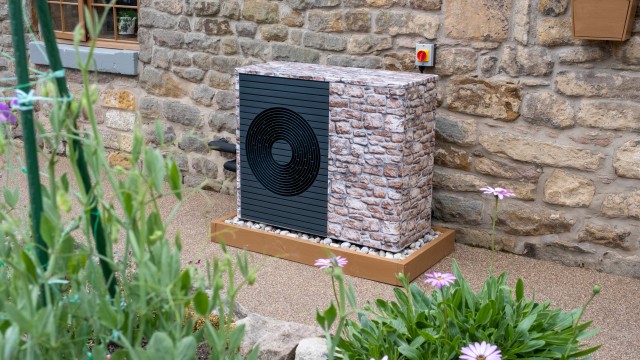
heat pump wrapped in brick

5. Do heat pumps work in older houses?

Heat pumps can be suitable for a wide range of properties, including new build homes and older houses. In many cases, they can be retrofitted with some modifications to the property.

Air source heat pumps are often the most flexible option and can work well for many property types, including terraced houses, as they do not require a large amount of outdoor space.

If you are considering a ground source heat pump, you will need enough garden space for either a borehole or ground array. For a water source heat pump, your home needs to be located within a suitable distance of a body of water, such as a lake, stream or pond.

A qualified Vaillant installer can assess your property and recommend the most appropriate option.

6. Do heat pumps need frequent maintenance?

Heat pumps have a robust design with very few moving parts, which means they are generally low maintenance.

Similarly to traditional gas boilers, they require an annual service by a heating engineer. Having your system serviced each year can help support its longevity, while also maintaining the validity of your Vaillant guarantee.

7. Do heat pumps only work with underfloor heating?

Underfloor heating works well with a heat pump, but it is not a requirement. Because it has a large surface area, the system can operate at a lower flow temperature.

Radiators can also work with a heat pump, although they may need to be upgraded to a larger output. This is because heat pumps operate more efficiently at lower temperatures.

Your Vaillant heat pump installer will help you choose the best option for your property.

8. Are heat pumps expensive to install?

Heat pumps can be more expensive to install than traditional gas boilers. However, government support may be available to help with the initial upfront cost.

The Boiler Upgrade Scheme (BUS), provides a grant of up to £7,500* for air source and ground source heat pumps. Water source heat pumps are included under the ground source criteria.

The scheme is available to homeowners in England and Wales. Your installer will apply for the Boiler Upgrade Scheme on your behalf and deduct the voucher from your final bill.

If you live in Scotland, alternative funding is available through the Home Energy Scotland (HES) grant, which also offers up to £7,500 towards the cost of installation. Homeowners in more remote areas may be eligible for the rural uplift of up to £9,000.

LATEST UPDATE - Rural Uplift

The Boiler Upgrade Scheme is changing

*The Boiler Upgrade Scheme grant is temporarily increasing for eligible homes and small businesses in England and Wales who rely on heating oil or LPG. From 21st July 2026 to 31 March 2027, eligible off-grid properties can get a £9,000 grant for air source or ground source heat pumps.

Watch our video on heat pump myth busting:

Comparing common heat pump questions

Do heat pumps work in cold weather?Yes, Vaillant heat pumps have been tested in temperatures down to minus 25°C.
Are heat pumps noisy?Modern air source heat pumps are much quieter than many people expect.
Modern air source heat pumps are much quieter than many people expect.You need outdoor space for the unit and internal space for components such as a hot water cylinder.
Do heat pumps need planning permission?In England, most air source heat pump installs no longer need planning permission, although some exceptions apply.
Do heat pumps work in older homes?Yes, many older homes can use a heat pump, although some upgrades may be needed.
Do heat pumps need regular servicing?Yes, they should be serviced annually by a heating engineer.
Do heat pumps only work with underfloor heating?No, they can also work with radiators, although upgrades may be needed.
Are heat pumps expensive to install?They can cost more upfront than a gas boiler, but grants may be available.
Frequently asked questions

Still have questions? We've got the answers

  • How does a heat pump work?

    A heat pump works by collecting heat from outside your home and transferring it into your heating and hot water system. Unlike a gas boiler, it does not burn fuel to create heat. Instead, it uses electricity to move existing heat from one place to another.

  • Are air source heat pumps suitable for most homes?

    Air source heat pumps are one of the most flexible options and can suit many UK homes. Your installer will need to assess your property first, including your insulation, radiators, pipework, hot water requirements and available space.

  • How much does a heat pump cost?

    The cost of a heat pump installation depends on the size of your home, the type of system, the condition of your existing heating system and whether any upgrades are needed. Government funding may be available to help reduce the upfront cost.

  • Can a heat pump lower my energy use?

    Heat pumps are highly efficient because they move heat rather than generate it by burning fuel. The overall running cost will depend on your home, energy tariff, heating habits and how well the system is installed and controlled.

  • How often should a heat pump be serviced?

    A heat pump should be serviced once a year by a qualified heating engineer. This helps keep the system working efficiently and supports the validity of your Vaillant guarantee.

Now you know more about heat pumps, it’s time to upgrade your home now